
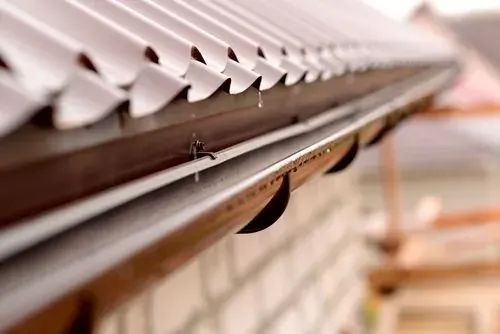
Gutter guards can reduce the amount of selected leaves and debris entering a gutter, but they do not make a roof-water system maintenance-free. The right option depends on the existing gutter’s condition, dominant debris, roof pitch, valleys, rainfall, water-entry behavior and access for future cleaning. Katy Gutter Pros helps Katy homeowners compare guard options and install a system that fits the existing or planned gutters. Call (281) 652-8877 to discuss an estimate.
What gutter guards can—and cannot—do
A gutter guard becomes part of the water-entry path. It may limit selected leaves, twigs or other debris while allowing rainwater to enter, but results change with debris type, roof geometry and maintenance. A guard cannot correct a low gutter, poor slope, damaged fascia, restricted outlet, undersized downspout or unsuitable discharge endpoint.
Guards may help by
- reducing selected debris entering the gutter body;
- limiting large leaves and twigs that can block outlets;
- changing the frequency of interior cleaning for some properties; and
- keeping an open trough covered while preserving service access when properly selected.
Guards cannot promise to
- stop every leaf, needle, seed pod or roof granule;
- prevent every clog, leak or overflow;
- correct a gutter system that is already undersized or poorly attached;
- eliminate inspection and cleaning; or
- guarantee protection from roof, water, erosion or foundation problems.
If gutters leak, sag, hold water or overflow while clean, address those causes before adding protection. Gutter cleaning and gutter repair may be necessary before guard installation.
Guard types to compare
“Gutter guard” describes a category, not one product. Actual model, compatibility and availability should be confirmed before a proposal is accepted.
| Guard category | Debris behavior to evaluate | Water and maintenance questions |
|---|---|---|
| Screen or perforated panel | Often limits larger leaves while smaller material may pass through | Can the panel be lifted and is the open area sufficient? |
| Micro-mesh | May limit finer debris than larger openings | Can roof grit or fine organic material mat on the surface? |
| Foam insert | Occupies space inside the gutter | How will retained moisture, removal and outlet access be handled? |
| Brush insert | Uses bristles to deter larger debris | What settles around the bristles and how is it cleaned? |
| Surface-tension cover | Directs water around a curved edge | How does it perform with pitch, valleys, heavy flow and surface debris? |
The best choice is conditional. It should be matched to what actually reaches the roof edge, not selected from a generic “best guard” claim.
Debris and Katy rainfall considerations
Start with the material on the property. Broad leaves can mat across a wet surface. Pine needles and fine linear debris can pass through larger openings or lodge at seams. Seed pods and live-oak material can compact when wet. Twigs can bridge an opening, while roof granules may pass through fine openings or accumulate inside the gutter.
Roof valleys, dormers and transitions can concentrate both water and debris into a short section. A product that performs well on a straight, low-flow eave may behave differently below a high-flow valley.
Katy-area rainfall also makes water entry important. NOAA Atlas 14 precipitation-frequency data is a design reference, not a promise about one home. The gutter, guard, outlets and downspouts should be considered together. The heavy-rain gutter guide explains why a premium guard cannot compensate for every upstream or downstream restriction.
Fit with existing gutters
Before a retrofit, Katy Gutter Pros reviews the condition and compatibility of the existing system. A guard should not hide an unresolved defect.
| Existing condition | Question before adding protection |
|---|---|
| Standing water | Can the low point or poor slope be corrected first? |
| Loose hangers or pull-away | Is the gutter and fascia secure enough for attachment? |
| Valley overflow | How will water enter the guard at the concentrated-flow location? |
| Restricted outlets or downspouts | Can the downstream bottleneck be cleared or redesigned? |
| Corrosion or open joints | Is repair or replacement more appropriate before a retrofit? |
| Roof or drip-edge concern | Does the proposed attachment follow current roof and product instructions? |
When guards are part of new gutter installation, the estimate should specify the gutter, guard, outlets, downspouts and discharge as one system.
Maintenance after installation
Guarded gutters still require observation and service. The schedule depends on surrounding trees, debris, roof shape, storms and product design. From the ground and when conditions are safe, look for material matted on the guard, spillover, water running behind the gutter, dry downspouts during rain, or shifted guard sections.
Ask how the guard surface, gutter body and outlets will be accessed. Follow the current manufacturer instructions and keep any product, installation and maintenance documents. “Lifetime” language should be read with its exclusions, registration requirements, labor limits and maintenance conditions.
Warranty and cost questions
A guard proposal may involve separate product, material, performance and workmanship documents. Ask who issues each document, what condition is covered, whether labor and removal are included, what maintenance is required and how a claim is submitted. A warranty title alone does not explain the remedy.
Cost depends on exact product, linear footage, corners, gutter width and profile, stories, access, roof pitch, valleys, preparation, repairs, removal of an old guard and future service access. The gutter cost guide explains why price per foot is not enough.
Request a gutter guard estimate or contact Katy Gutter Pros with the gutter type, surrounding trees, known clogs and photos taken safely from the ground.
Frequently asked questions
Are gutter guards maintenance-free?
No. Guards can reduce selected debris, but material can collect on the surface or enter the gutter. The gutter body, outlets and downspouts still need inspection and service access.
Which gutter guard is best for Katy homes?
There is no universal best product. The answer depends on dominant debris, roof pitch, valleys, gutter condition, rainfall, water-entry behavior, attachment method and maintenance access.
Do guards work with pine needles and roof grit?
Some fine-opening products may limit more needles than basic screens, but fine debris can mat on the surface or enter at seams. Roof grit can still accumulate.
Can gutter guards make heavy-rain overflow worse?
A guard can affect how water enters the gutter, especially when debris covers it or valleys concentrate flow. Overflow can also come from gutter, outlet, downspout or discharge limits.
Can guards be installed on existing gutters?
Often, but compatibility and condition must be checked. Existing gutters should have suitable slope, secure attachment, open outlets and serviceable material before a guard is added.
Will guard installation affect my roof warranty?
It depends on the roof manufacturer, guard product and attachment method. Review current written instructions and warranty exclusions for both products.
What should a gutter-guard estimate include?
It should name the product or category, confirm gutter compatibility, document debris and valley conditions, explain attachment and cleaning access, and separate product terms from workmanship terms.