
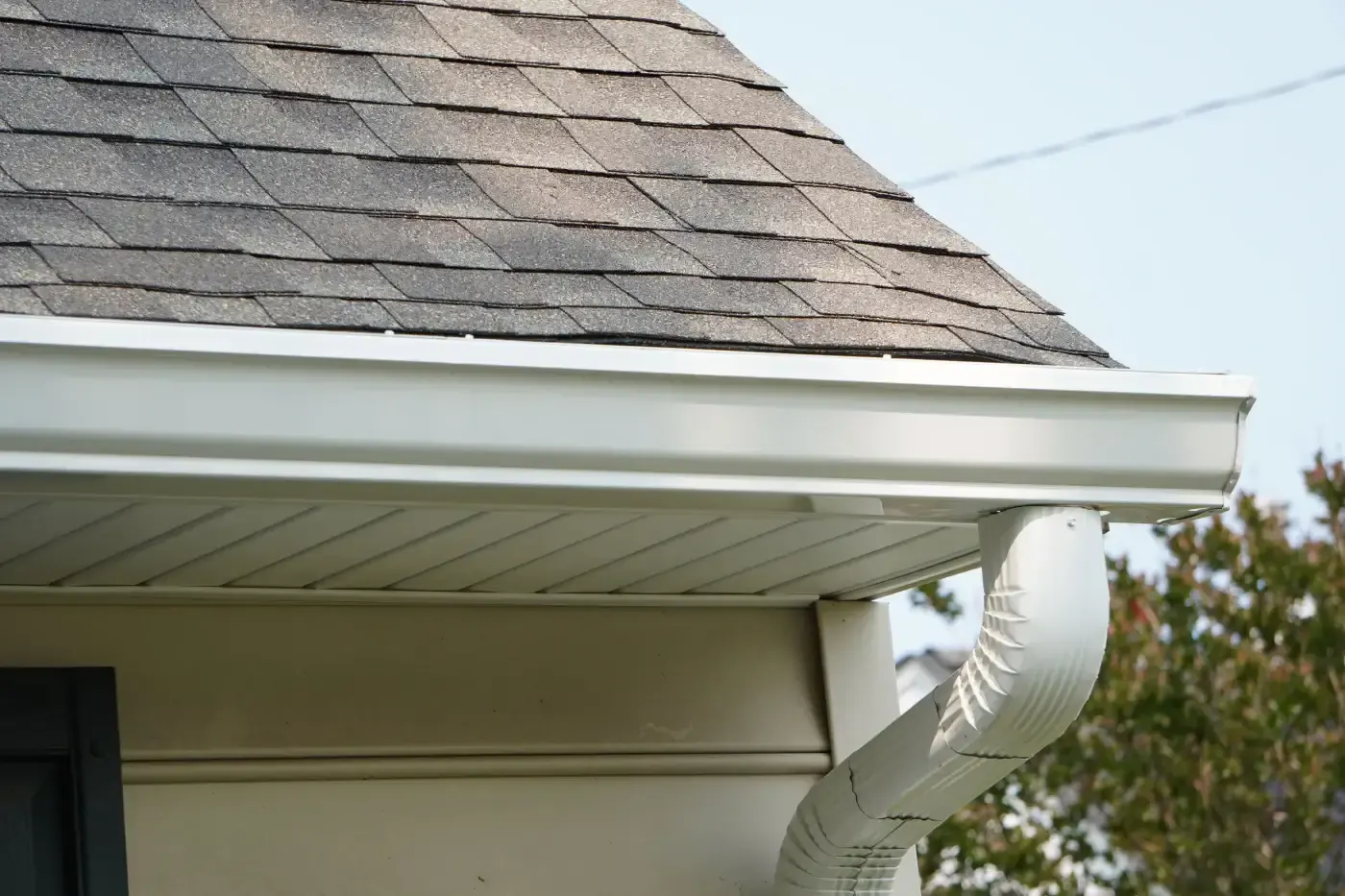
An accurate Katy gutter price requires measured linear footage and a defined system. Size, material, profile, stories, access, corners, removal, fascia conditions, outlets, downspouts, extensions, guards and repair complexity can all change the total. Katy Gutter Pros does not publish a fabricated local average; we help homeowners prepare a comparable scope and request a property-specific estimate. Call (281) 652-8877 to discuss the next step.
Why gutter prices vary
Two quotes can cover different systems even when they use the same number of linear feet. One may include larger gutters, more outlets, removal and disposal while another omits extensions, fascia work, downspouts or cleanup. Price per foot is useful only after the specifications match.
| Cost driver | Define in writing | Why it changes the quote |
|---|---|---|
| Measured length | Gutter feet by roof elevation | Material and labor follow actual runs, not floor area |
| Size and profile | 5-inch or 6-inch; K-style, half-round or other profile | Dimensions change coil, hangers, outlets and downspouts |
| Material | Type, thickness or gauge, finish and color | Price, weight, fabrication and fastening differ |
| Roof geometry | Corners, valleys, long runs and transitions | Adds components and concentrated-flow decisions |
| Height and access | Stories, setbacks, landscaping and ground conditions | Safe setup and equipment needs vary |
| Existing conditions | Removal, disposal, fascia, soffit, drip edge and roof edge | Hidden deterioration can change scope |
| Drainage | Outlets, downspouts, elbows, extensions and endpoints | A complete system includes where water goes |
| Protection | Exact guard product and preparation | Product, attachment and future service access differ |
Linear footage is only the starting quantity
Contractors commonly measure gutter runs in linear feet, but a final total is not simply feet multiplied by a rate. The estimate should show which roof edges receive gutters and why. Ask whether corners, end caps, outlets, miters and custom transitions are included.
Projected roof drainage area is a separate design input. A home can have modest floor area but a roof layout that concentrates water into a long eave or inside corner. Valleys, steep sections and limited outlet locations can change the system without changing footage very much.
Why house square footage cannot set a gutter price
Floor area describes living space; gutter scope follows selected roof edges. Two 2,000-square-foot homes can have different footage because one is a compact two-story structure and the other is a broad one-story footprint. Valleys, attached garages, patios, partial coverage and outlet locations change the design again.
Use home size only as an intake clue. A written quote should measure:
- selected eaves and elevations;
- roof valleys and catchment areas;
- stories and access;
- corners and outlets;
- downspouts, elbows and extensions;
- material, profile, width and finish; and
- guards, removal and related repairs.
Does 6-inch cost more than 5-inch?
A 6-inch system generally uses more material and compatible larger components than a comparable 5-inch system, but the difference depends on profile, material, downspouts, outlets and job complexity. “Bigger is better” is not a design explanation. Ask what roof-area and rainfall inputs justify the selected size.
The 5-inch versus 6-inch gutter guide explains the capacity tradeoff. The gutter, outlet and downspout should be sized as one path.
Material, profile and seamless construction
“Aluminum gutters” is not a complete specification. A comparable quote identifies size, profile, material thickness, finish, hanger system, fasteners, sealants and accessory compatibility. Steel, copper, vinyl and half-round profiles involve different material behavior, component availability and installation requirements.
For seamless gutters, ask which runs are formed to length and where connections remain. Corners, end caps and outlets still create joints. Compare the complete component list rather than assuming the label removes every leak point.
Stories, access and existing conditions
Upper-story work, difficult ladder placement, steep terrain and restricted access can affect labor and equipment. Removal may expose damaged fascia, soffit, drip edge or roof-edge details. Those items may be outside the gutter scope; the proposal should identify what is included, excluded or contingent on another trade.
Ask whether the quote includes all elevations, setup, protection for landscaping and surfaces, cleanup, material removal, applicable allowances and written change-order rules.
Downspouts, extensions, guards and repairs
Horizontal gutter footage does not define the drainage path. Require the quote to list outlet count, downspout dimensions, elbows, wall offsets, extensions and discharge endpoints. Buried piping should be a separate, clearly described scope if it is involved.
For gutter guards, require the product or category, attachment method, compatible gutter size, preparation and service-access plan. For gutter repair, separate localized components from fascia, roof, grading or underground-drainage work.
A blank comparison specification
Use the same worksheet when asking for multiple proposals. Leave prices blank until each provider supplies them.
| Scope item | Specification | Quoted amount |
|---|---|---|
| Gutter runs | ___ linear feet by elevation | $___ |
| Size/profile | ___-inch ___ profile | $___ |
| Material | Type, thickness/gauge, finish: ___ | $___ |
| Outlets | Quantity and size: ___ | $___ |
| Downspouts | Quantity, dimensions and material: ___ | $___ |
| Elbows/offsets | Quantity and locations: ___ | $___ |
| Extensions | Type and endpoints: ___ | $___ |
| Corners/miters | Quantity and type: ___ | $___ |
| Removal/disposal | Included / excluded | $___ |
| Guards | Product/type and footage: ___ | $___ |
| Related repairs | Defined allowance or excluded | $___ |
| Tax/permit allowance | Included / excluded / not applicable | $___ |
| Total | Based on all listed scope | $___ |
How to compare estimates
- Normalize the scope: Confirm the same elevations, footage, size, material, downspouts, removal and add-ons.
- Compare components: Ask for dimensions, thickness or gauge, hanger approach, outlet count and guard product instead of “premium” labels.
- Separate allowances: Identify fascia repair, buried drainage and permit uncertainty rather than hiding them in a vague total.
- Read terms: Compare payment milestones, change orders, cleanup and each product or workmanship warranty.
- Verify the business: Confirm the provider’s identity, current service area, insurance and applicable credentials directly before hiring.
The Texas Attorney General’s home-improvement guidance recommends written terms, reference checks and caution with payment demands. Request a measured estimate or contact Katy Gutter Pros to begin.
Why this page does not publish a Katy average
A local average is meaningful only when recent quotes use comparable materials, dates, jurisdictions and scope definitions. Mixing national publisher ranges, different profiles, removal assumptions and unrelated repair jobs creates false precision. A defensible local study would need dated, itemized Katy quotes with a stated sample and exclusions. Until that evidence exists, a comparison framework is more useful than an invented average.
Frequently asked questions
How much do gutters cost in Katy, Texas?
There is no supported one-price answer without measured footage and system details. Request an itemized quote covering size, material, stories, corners, outlets, downspouts, removal, access, repairs and optional guards.
Is gutter pricing based on linear feet?
Linear footage is a common starting quantity, but roof geometry, height, material, size, corners, removal, access and drainage components also affect the total. Compare price per foot only when scopes match.
Are downspouts included in gutter installation cost?
Sometimes, but never assume they are. The quote should list quantity, dimensions, outlets, elbows, extensions and discharge work. Buried piping may be separate.
Should a quote include fascia repair?
Only if the provider offers and lists it. Ask how hidden damage will be documented and priced, and whether a roofer or carpenter is needed for work outside gutter scope.
Do gutter guards pay for themselves?
That depends on guard cost, debris conditions, cleaning access and continuing maintenance. No product eliminates all inspection or cleaning, so compare realistic service needs.
Why are two gutter quotes so different?
They may specify different sizes, materials, outlet counts, downspouts, access, removal or exclusions. Normalize the scope and ask each provider to explain design differences.
What should I have ready for a gutter estimate?
Approximate footage, photos of each elevation, story count, overflow locations, material preferences and whether existing gutters or guards need removal can help. Final pricing should follow measured scope.
Can you provide a price over the phone?
A phone conversation can identify the likely service and schedule a measured review, but reliable pricing depends on the property, access, materials, drainage components and any concealed conditions.