
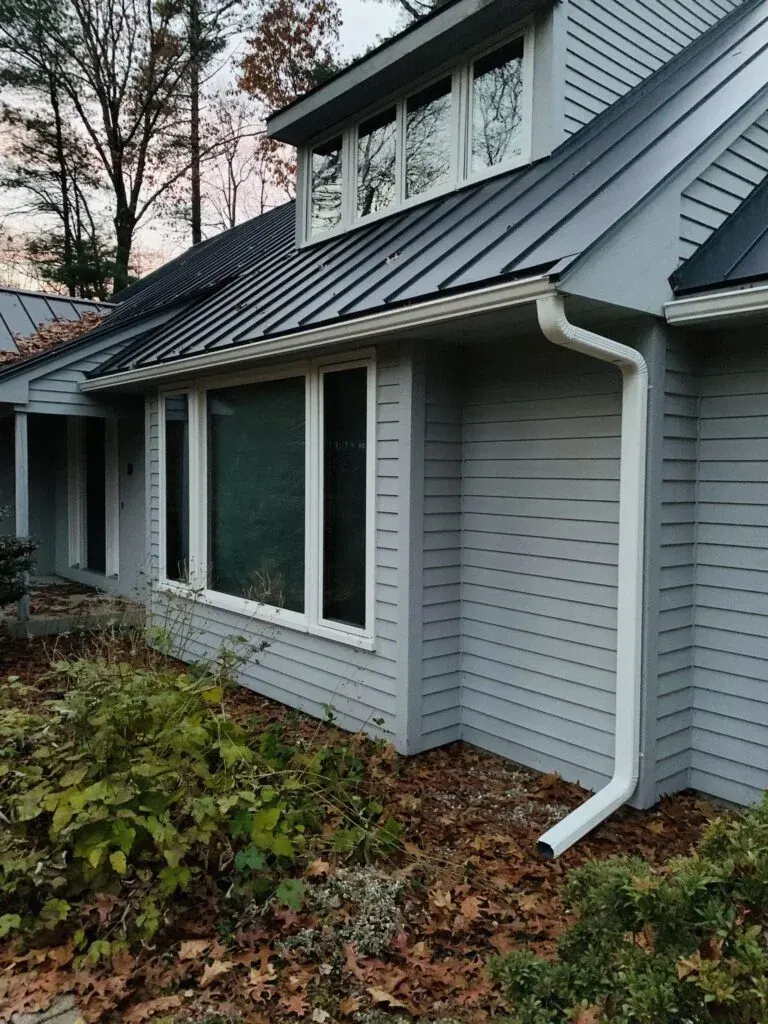
Gutter guards can be worth considering when they reduce a recurring debris burden and make maintenance safer or more manageable. Value depends on tree cover, debris type, roof geometry, existing gutter condition, cleaning access, product fit and heavy-rain behavior. Guards are not maintenance-free: their surfaces, gutters, outlets and downspouts still need inspection and occasional cleaning.
When gutter guards may be worth it
Protection deserves comparison when:
- leaves, needles or seed pods repeatedly block the same system;
- the property is difficult or hazardous to access for frequent cleaning;
- the gutter body and attachment are already in serviceable condition;
- the selected product fits the gutter, roof edge, valleys and outlets; and
- the expected reduction in debris and maintenance effort justifies the installed cost.
“Worth it” is a property decision, not a universal product verdict. A home with few nearby trees and easy access may receive less value than a two-story home under heavy tree cover.
What guards can and cannot do
| Guards may help with | Guards cannot promise |
|---|---|
| Reduce selected leaves and larger debris entering the trough | No debris will ever reach the gutter |
| Keep some outlets clearer between service visits | A maintenance-free system |
| Reduce the frequency or difficulty of removing large debris | No cleaning or inspection will be needed |
| Create a surface that is easier to monitor than an open, full gutter | Protection from roof, water, erosion or foundation problems |
| Make a recurring maintenance problem more manageable | That heavy-rain overflow will disappear |
A guard is an accessory to a functioning roof-water system. It is not a substitute for correct slope, adequate outlets, downspouts or discharge.
Match the product to the debris and roof
Different guard categories behave differently with leaves, needles, roof grit and intense rainfall. Before choosing, ask:
- What debris is actually entering the system?
- Does the surface shed larger leaves or trap fine roof grit?
- How does water enter at valleys and steep roof sections?
- Can the product be removed or cleaned when the surface loads up?
- Does the attachment method interact with shingles, drip edge or the roof warranty?
- Are the gutter profile, size, corners and outlets compatible?
Do not accept “lifetime,” “maintenance-free” or “heavy-rain” language without the product model, current documentation, exclusions and maintenance requirements.
Heavy rain changes the question
A NOAA Atlas 14 point query near central Katy returned an estimated 2.17-inch depth for a 2-year, 60-minute event on July 21, 2026. This is a point precipitation-frequency estimate, not a forecast or a property design. It supports evaluating water entry at valleys and roof edges, but it does not identify a universally best guard.
Ask how the guard, gutter, outlets and downspouts work together under concentrated flow. A short clean-sample demonstration does not prove performance across a full roof. The heavy-rain guide explains system capacity; this page focuses on guard value and maintenance.
Existing gutter condition comes first
Do not cover a defect and call it an upgrade. Before installation, check whether the gutter:
- holds standing water or has low points;
- pulls away or has loose hangers;
- has open joints, corrosion or damaged end caps;
- repeatedly overflows at valleys;
- has restricted outlets or downspouts; or
- is attached to deteriorated fascia or a roof edge needing separate work.
Repair or replacement may make more sense before adding guards. The gutter guard service page covers installation scope, while the repair page addresses defects that protection cannot correct.
Compare cost against maintenance—not a promise of savings
A guard estimate should identify product, linear footage, corners, roof transitions, attachment, pre-installation cleaning, repairs, removal, access, cleanup and warranty documents. Compare that scope with the cost and difficulty of cleaning the existing system over time.
Do not assume guards pay for themselves on a fixed schedule. The outcome depends on debris, product life, maintenance, installation quality, access and the condition of the underlying gutter. Use the gutter cost guide to normalize the proposal.
Roof and warranty questions
Gutter-cover installation can interact with the roof edge and manufacturer instructions. GAF Technical Bulletin R-113, for example, distinguishes shingle manufacturing defects from damage caused by gutter-cover installation. That is one manufacturer’s document, not a universal warranty rule.
Before approval, identify the roof product, guard model, attachment method, responsible warranty issuer, exclusions and maintenance requirements in writing. Request a gutter guard estimate with photos of the existing system taken safely from the ground.
Frequently asked questions
Do gutter guards eliminate cleaning?
No. Guards can reduce selected debris, but the surface, gutter body, outlets and downspouts still need inspection and occasional cleaning.
Which gutter guard is best for Katy homes?
There is no universal best type. Compare debris, roof geometry, valleys, rainfall entry, gutter condition, attachment method, cleaning access, documentation and cost for the specific property.
Do guards work with pine needles and roof grit?
Performance varies by product, debris and roof layout. Ask how fine material is handled and how the surface and gutters can be cleaned.
Can gutter guards make heavy-rain overflow worse?
They can contribute if water entry, product fit, debris loading, valley flow or maintenance is not addressed. Evaluate the guard with the complete gutter and downspout system.
Can guards be installed on existing gutters?
Often, but compatibility and condition must be confirmed. Loose, corroded, poorly sloped or damaged gutters may need repair or replacement first.
Will gutter guards affect my roof warranty?
It depends on the roof product, guard and attachment method. Review the current written documents for both products and identify who is responsible for each warranty.
What should a gutter-guard estimate include?
It should name the product and model, confirm compatibility, list footage and transitions, explain attachment, cleaning and repair scope, state exclusions and provide price and warranty terms.
Sources
- NOAA Atlas 14 precipitation-frequency point query near central Katy
- GAF Technical Bulletin R-113: Gutter Covers and Shingles
- Texas Department of Insurance: Prepare for a Hurricane or Tropical Storm
- U.S. Department of Energy: Gutters and Downspouts
Content review date: August 8, 2026.