
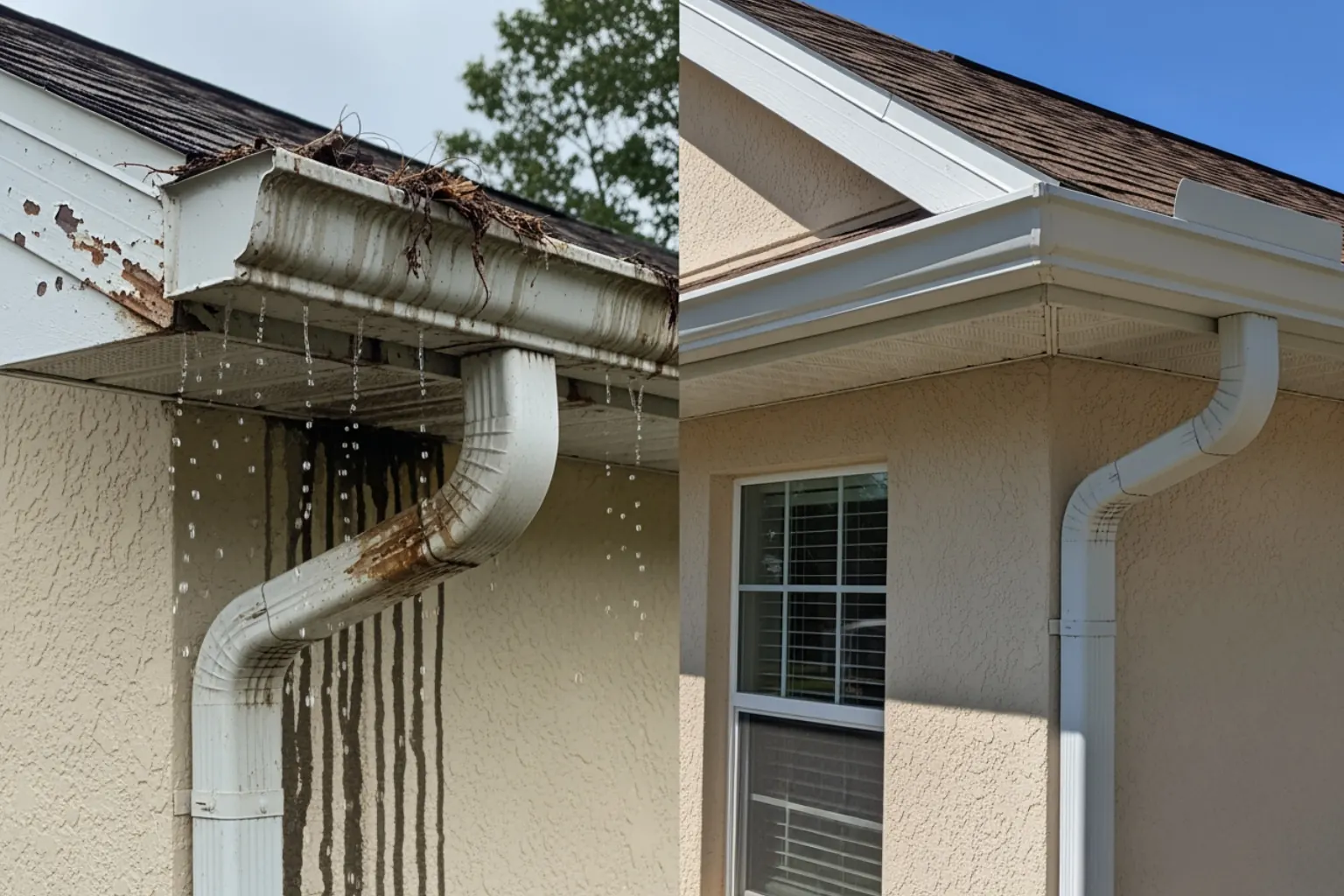
There is no single cleaning schedule for every Katy property. Inspect gutters at practical seasonal points and after major wind or rain, then clean whenever leaves, needles, roof grit or other debris restricts the gutter, outlets or downspouts. Homes under trees, systems with valley concentration and gutters with a history of overflow may need attention more often than open, simple rooflines.
What changes the schedule
A calendar is a reminder to inspect; the property determines when cleaning is needed.
| Property condition | Why it changes frequency | What to watch for |
|---|---|---|
| Overhanging or nearby trees | Leaves, needles, seed pods and small branches enter the system | Debris mats, repeated clogs and blocked outlets |
| Roof grit or moss-like debris | Fine material moves toward outlets and downspouts | Sediment, slow drainage and standing water |
| Valleys and large roof sections | More water and debris concentrate in short runs | Local overflow during rain |
| Existing guards | Surface debris remains even when less enters the trough | Blocked screens, restricted water entry and inaccessible gutters |
| Two-story or difficult access | Inspection and cleaning are harder to perform safely | Deferred maintenance and hidden buildup |
| Prior overflow or sagging | A small restriction can expose an existing defect | Staining, pull-away, low points or repeated spills |
A simple roof under open sky may need less attention than a tree-covered home, but no property should be assigned a schedule without considering actual debris and flow.
Practical times to inspect in Katy
Use three evidence-based triggers:
- Before a period of severe weather: Texas Department of Insurance guidance recommends cleaning gutters so water can drain faster before a hurricane or tropical storm. That is a useful pre-storm check, not a guarantee that a clean system will handle every rainfall event.
- After major wind or rain: Look from the ground for new branches, visible overflow, displaced components, erosion or a downspout that is no longer discharging normally.
- When the property shows symptoms: Do not wait for a calendar date when water spills over the edge, gutters hold standing water, downspouts stop flowing, or staining appears below the eaves.
Seasonal timing should follow the property’s trees, roof debris and storm exposure. A twice-yearly schedule can be a starting point for some homes, but it is not a universal rule.
Signs not to wait for the next cleaning date
Schedule attention sooner when you see:
- water spilling from the same location during rain;
- visible plants or a debris line growing in the gutter;
- standing water after rainfall;
- downspout flow that is weak or absent;
- staining on fascia, siding or below a joint;
- sagging, pull-away, loose straps or a separated section;
- soil erosion or ponding beneath a discharge point; or
- a guard surface covered with debris or roof grit.
Cleaning removes a flow restriction. It does not correct poor slope, inadequate capacity, failed attachment, corrosion, roof-edge capture or a blocked underground endpoint. Link symptoms to the gutter repair page when debris is not the whole problem.
What a thorough cleaning scope should cover
Before approving service, ask whether the scope includes:
- debris removal from accessible gutter runs;
- outlet and downspout flow checks;
- removal and disposal of collected debris;
- guard or screen surface cleaning when present;
- visible inspection for leaks, sagging, pull-away and corrosion; and
- a clear statement of work that cleaning does not include, such as fascia, roof, grading, buried drainage or structural repair.
A clean gutter is not proof that the full roof-water system is correctly sized. If overflow continues after cleaning, review why gutters overflow rather than repeating the same service without investigating the cause.
How gutter guards change maintenance
Guards can reduce selected debris entering the gutter, but they do not eliminate inspection. Leaves and roof grit can remain on the surface, collect at valleys or restrict water entry. The gutter body, outlets and downspouts still need access and periodic review. A guard that makes cleaning difficult can change the work rather than remove it.
Use are gutter guards worth it? to weigh debris burden, access, product fit, cost and maintenance before adding protection.
Safety comes before frequency
Do not climb a wet roof or unstable ladder to check a gutter. CDC/NIOSH ladder guidance and the U.S. Consumer Product Safety Commission both emphasize safe setup and fall prevention. Ground-level observations are enough to begin a service conversation; a property owner does not need to create a fall risk to measure debris.
Request a gutter-cleaning estimate with the property location, story count, tree conditions, visible symptoms and whether guards are installed.
Frequently asked questions
Should Katy gutters be cleaned twice a year?
Twice-yearly cleaning may suit some properties, but trees, roof debris, guards, valleys, storms, access and prior overflow can require a different schedule. Inspect conditions rather than relying on one calendar rule.
Should gutters be cleaned before hurricane season?
A pre-storm inspection and cleaning can help keep water paths open. Texas Department of Insurance guidance supports cleaning before a hurricane or tropical storm, but clean gutters do not guarantee that a system handles every event.
Do gutter guards reduce cleaning frequency?
They may reduce selected debris entering the gutter, but surfaces, outlets, downspouts and the gutter body still need inspection and occasional cleaning.
Why do clean gutters still overflow?
Overflow can continue when the cause is poor slope, inadequate capacity, valley concentration, limited outlets, restricted downspouts, roof-edge bypass or a blocked discharge endpoint.
Does gutter cleaning include downspouts?
It depends on the written scope. Ask whether downspouts and outlets will be checked for flow, whether extensions are included and what happens if a blockage or damage is found.
When should gutters be checked after a storm?
Check from the ground after major wind or rain for branches, visible overflow, pull-away, erosion, standing water and changed downspout flow. Do not climb a wet roof or ladder.
What if cleaning reveals damaged gutters?
Separate debris removal from repair or replacement. The estimate should identify the damage, proposed remedy, price, exclusions and any related fascia, roof-edge or drainage scope.
Sources
- Texas Department of Insurance: Prepare for a Hurricane or Tropical Storm
- NWS Houston/Galveston: Southeast Texas Hurricane Guide
- CDC/NIOSH Ladder Safety
- U.S. Consumer Product Safety Commission: Outdoor Repairs Safety Checklist
Content review date: August 8, 2026.