
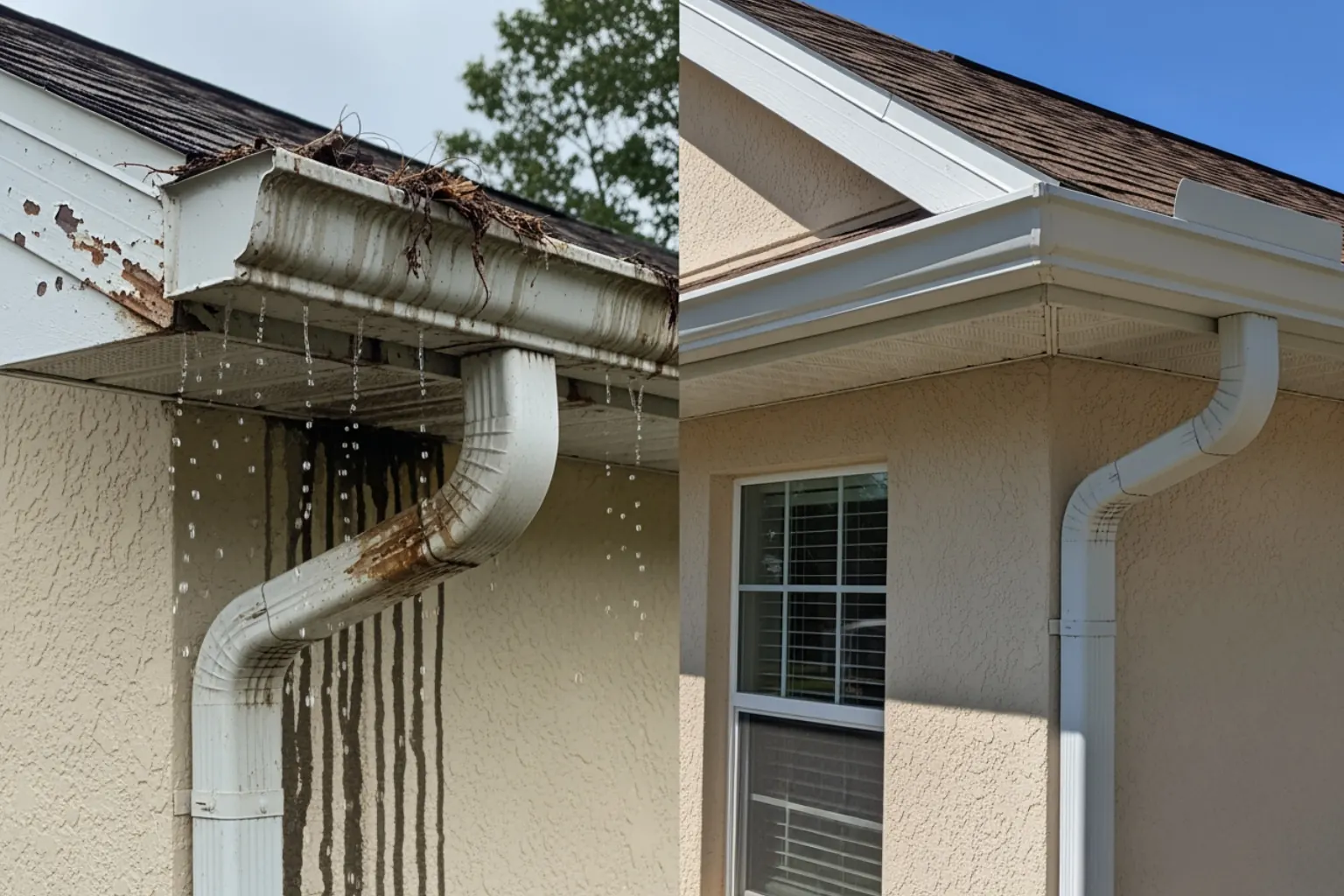
Common signs of a clogged gutter system include water spilling over the edge, standing water after rain, visible leaf buildup, plants growing in the trough, weak or absent downspout flow and staining below the eaves. A clog can occur in the gutter, outlet, downspout or discharge line. Inspect from the ground, avoid roof and ladder risks, and separate cleaning from repair when symptoms continue after debris is removed.
Signs that deserve attention
| What you notice | Where the restriction may be | What it may also indicate |
|---|---|---|
| Water spills over the front edge | Gutter body, low point, valley or capacity | Poor slope, roof-edge bypass or intense rainfall |
| Gutter holds water after rain | Outlet, downspout or low section | Sagging, loose hangers or inadequate slope |
| Leaves form a thick mat | Gutter body or guard surface | Seasonal debris burden or blocked water entry |
| Plants grow in the trough | Long-standing organic buildup | Corrosion, saturated debris or neglected cleaning |
| Downspout has little or no flow | Outlet, elbow, vertical pipe or endpoint | Crushed line, buried blockage or discharge backup |
| Staining appears below a joint | Overflow, leak or failed connection | Corrosion, open seam or roof-edge issue |
| Soil washes out below a downspout | Endpoint or extension | Concentrated discharge or grade problem |
One sign can have more than one cause. A visual symptom is a reason to inspect, not a remote diagnosis.
Clogs can occur in more than the trough
A gutter may look open while the outlet or downspout is blocked. Fine roof grit can settle at a connection, leaves can wedge in an elbow and a buried line can restrict the endpoint. Guards can reduce larger debris but still collect surface debris or fine material that affects water entry.
When water rises in a clean-looking gutter, follow the path from the outlet down. The downspout and drainage page explains the boundary between gutter-connected discharge and broader grading or underground drainage work.
Clogged versus poorly sloped or undersized
Cleaning is a reasonable first question when debris is visible, but repeated overflow after cleaning points to more than a clog. Poor slope creates a low point, a valley can concentrate water, and a roof section may send more runoff than the gutter, outlets or downspouts can convey. Read why gutters overflow before repeating a cleaning service without checking the cause.
A clean gutter can still need repair, redesign or replacement. The estimate should state what was observed and what the proposed service is intended to address.
Safe ground-based inspection
From the ground, observe:
- whether debris is visible over the gutter edge;
- where overflow begins during rain;
- whether water exits the downspout normally;
- whether a joint, hanger or section has pulled away;
- whether an extension discharges toward the building; and
- whether staining or erosion is new or recurring.
Do not walk on the roof or climb a wet, unstable or difficult ladder to confirm a clog. The gutter-cleaning safety guide explains when to stop and hand the work to a qualified professional.
When cleaning is the right next step
Cleaning may be appropriate when debris restricts the gutter body, outlets or downspouts and the system is otherwise sound. A written cleaning scope should identify accessible runs, debris removal, outlet and downspout flow checks, disposal, guard-surface work and what happens if damage is found.
Use the how-often gutters should be cleaned guide to set a schedule based on trees, roof debris, storms, guards and past symptoms. Do not assign every home the same frequency. The gutter-cleaning service page covers cleaning intent; use gutter repair when the system remains damaged or the symptom continues after debris is removed.
When a clog reveals a repair problem
A cleaning visit should not hide damage. Repair deserves a separate review when the gutter remains blocked, overflows when clean, holds standing water, pulls away, leaks at multiple connections or discharges beside the wall. Repair, replacement, fascia work, roof-edge work and underground drainage should be listed separately when they are outside the cleaning scope.
Request gutter-cleaning or repair availability with the property location, story count, tree conditions, symptom location and any safe ground-level photos.
Frequently asked questions
What is the most obvious sign of a clogged gutter?
Water spilling over the edge during rain is common, but the cause may also be poor slope, capacity, a valley, restricted outlets or a downspout. Look for the full flow-path problem.
Can gutters be clogged if they look clean?
Yes. The outlet, elbow, downspout or buried discharge line may be restricted even when the visible gutter body appears open.
Do plants growing in gutters mean they need replacement?
Plants usually indicate long-standing organic buildup and a need for cleaning and condition review. Replacement depends on corrosion, damage, attachment and system performance.
Why is there standing water after cleaning?
Possible causes include poor slope, a low point, restricted outlet, blocked downspout or inadequate discharge. Cleaning alone cannot correct those conditions.
Can gutter guards prevent clogs?
They may reduce selected debris entering the trough, but surfaces, outlets and downspouts still need inspection and maintenance.
Can I check a clogged gutter from the ground?
Yes. Observe overflow, visible debris, downspout flow, pull-away and endpoint ponding from a safe position. Do not climb a wet roof or unstable ladder.
When should a clogged gutter become a repair request?
Request repair when symptoms continue after cleaning, the gutter leaks or sags, the downspout remains restricted, or the system appears poorly sized or attached.
Sources
- Texas Department of Insurance: Prepare for a Hurricane or Tropical Storm
- NWS Houston/Galveston: Southeast Texas Hurricane Guide
- CDC/NIOSH Ladder Safety
- U.S. Consumer Product Safety Commission: Outdoor Repairs Safety Checklist
Content review date: August 8, 2026.