
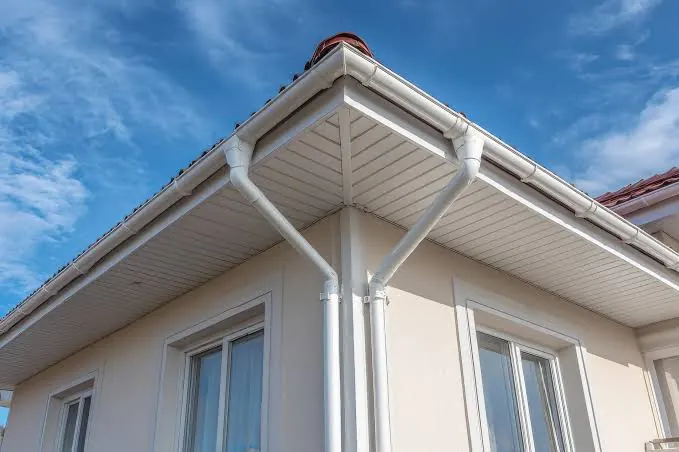
Gutters may need replacement when damage is widespread, failures keep returning, the attachment substrate is compromised, or the system is poorly designed for the roof and discharge path. A single leak, loose hanger or blocked downspout does not automatically require a new system. Compare localized repair, partial replacement and broader redesign after the gutter body, roof edge, outlets, downspouts and endpoints are reviewed together.
Replacement warning signs to investigate
| Sign | Why replacement may deserve comparison | What could still be repairable |
|---|---|---|
| Widespread corrosion or holes | Multiple runs may no longer provide a stable water path | A localized surface or joint issue |
| Repeated leaks in many connections | Patching may not address aging material or movement | One failed seam, end cap or outlet |
| Sagging across long sections | Slope and attachment may be failing beyond one hanger | A discrete loose hanger with sound fascia |
| Pull-away from the home | Substrate, fasteners or the gutter system may be compromised | A small attachment failure with sound support |
| Repeated overflow after cleaning | Capacity, valleys, outlets or downspouts may be wrong system-wide | A confirmed clog or isolated low point |
| Severe impact or storm damage | Distorted runs may no longer drain as designed | A limited dent or replaceable component |
| Persistent fascia or roof-edge problems | New gutters may require a different attachment and related scope | A gutter repair when the substrate is sound |
These are investigation triggers, not remote diagnoses.
Widespread corrosion and physical damage
Rust, pinholes, open seams, severe dents and distorted runs can make repeated repairs less coherent. The material, coating, exposure, fasteners and surrounding conditions affect whether a section can remain in service. If corrosion is limited to one connection, repair may be sensible; if it appears throughout multiple elevations, compare replacement.
Storm damage should be documented with safe ground-level photos and a written scope. Insurance coverage depends on the policy and cause of loss. Do not promise claim handling or coverage based on a gutter symptom.
Sagging, pull-away and attachment failure
Gutters should drain toward their outlets rather than hold water in low points. Long sagging runs, repeated pull-away or loose attachment can indicate a hanger, fascia, roof-edge or design issue. Adding fasteners without checking the substrate may conceal the underlying condition.
Ask whether the estimate separates gutter work from fascia, soffit, roof-edge or structural repair. A replacement system still requires a sound attachment surface or a clearly documented related-trade plan.
Repeated overflow and poor system design
A gutter that overflows after cleaning may have a capacity, valley, slope, outlet, downspout or discharge problem. A new gutter with the same run and outlet layout can reproduce the old symptom. Read why gutters overflow and compare roof catchment, gutter width, profile, outlets, downspouts and endpoints.
Replacement becomes more compelling when the existing design cannot be corrected economically or the system has widespread failure. It is not justified merely by a larger product label.
Age is a clue, not a verdict
A gutter’s age can help frame questions, but there is no universal replacement age that applies to every material, installation and property. Condition, maintenance, exposure, storm damage, attachment and performance matter more than a calendar number alone.
The repair-versus-replacement guide provides a decision framework. The gutter cost guide explains why a repair price and a replacement price cannot be compared without matching scope.
Replacement checklist
Before approving replacement, ask for:
- measured footage by elevation and roof catchment by run;
- gutter profile, width, material, finish and component specification;
- corners, end caps, outlets, hangers and downspouts;
- extensions, splash blocks or separate drainage endpoints;
- removal, disposal, fascia, roof-edge, grading and cleanup boundaries;
- price, payment terms and change-order process; and
- product and workmanship documents, including who issues each term.
Request a Katy gutter estimate when you want repair and replacement options compared in writing. For service-specific next steps, compare gutter repair, gutter installation, and downspouts and drainage as separate parts of the scope.
Frequently asked questions
Does one leaking section mean I need new gutters?
No. A localized leak may be repairable when the surrounding gutter, attachment and fascia are sound. Replacement deserves comparison when leaks are widespread or repeatedly return.
Can sagging gutters be rehung instead of replaced?
Sometimes. A discrete hanger or attachment issue may be repairable, but long sagging runs, damaged fascia or repeated pull-away require a broader condition review.
Should gutters be replaced with the roof?
Not automatically. Roof work and gutter attachment interact, but replacement should follow the actual gutter condition, roof-edge scope and runoff design.
Can clean gutters still need replacement?
Yes. Cleaning does not correct widespread corrosion, poor slope, inadequate capacity, damaged attachment, roof-edge bypass or a system-wide outlet problem.
Are rust spots a sign gutters must be replaced?
Small surface spots may be manageable, while widespread corrosion, pinholes and open seams deserve replacement comparison. Material and surrounding condition determine the scope.
Will larger gutters fix a failing system?
Not necessarily. Larger gutters cannot correct poor slope, restricted outlets, undersized downspouts, valley splash, damaged fascia or a bad discharge endpoint.
What should a replacement estimate include?
It should identify measured scope, material, profile, size, components, downspouts, removal, related-trade exclusions, cleanup, price, changes and written product/workmanship terms.
Sources
- NOAA Atlas 14 precipitation-frequency point query near central Katy
- DOE Building America: Gutters and Downspouts
- Texas Department of Insurance: Home Damaged by Storm FAQ
- U.S. Consumer Product Safety Commission: Outdoor Repairs Safety Checklist
Content review date: August 8, 2026.