
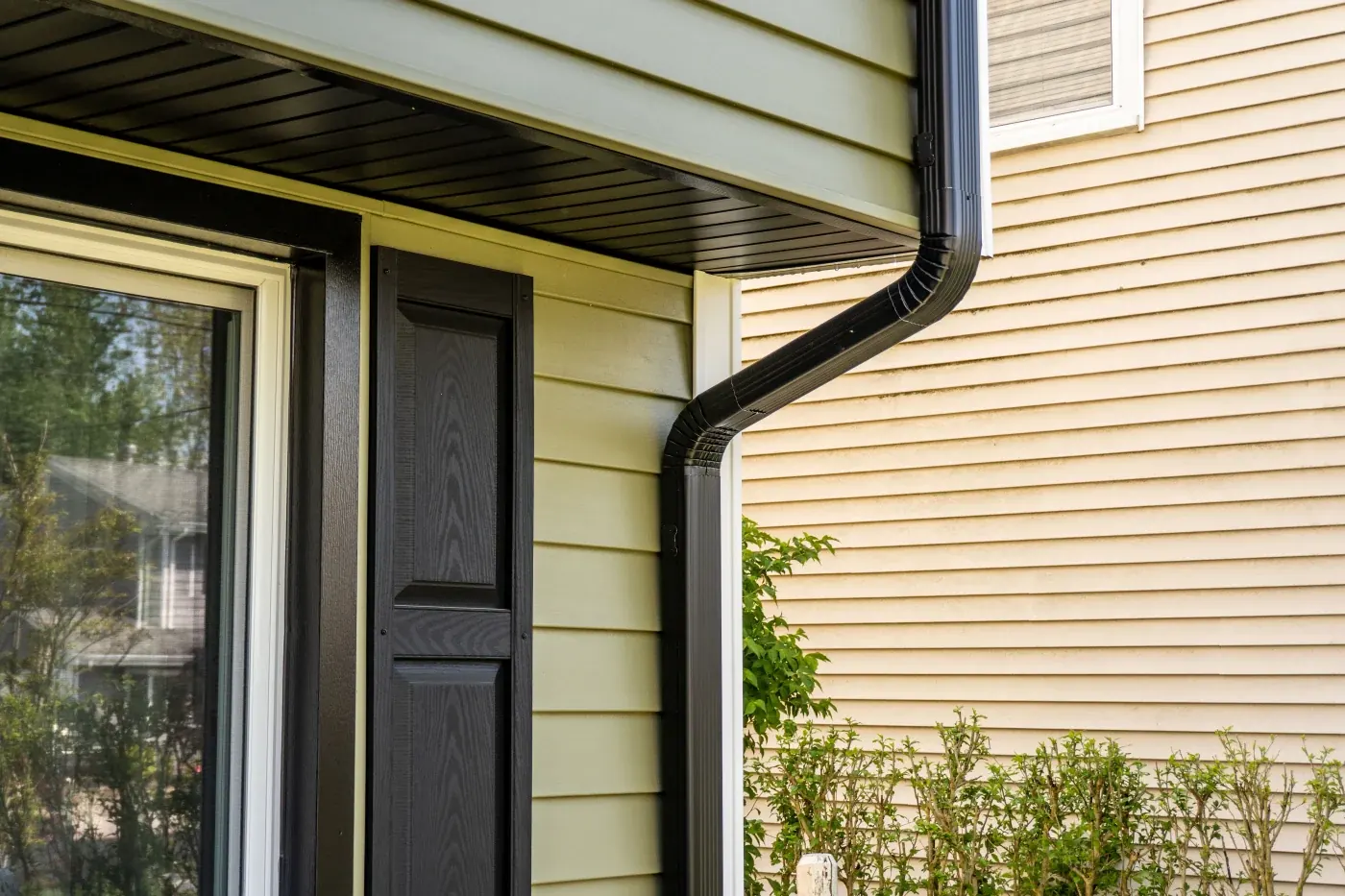
Functioning gutters and downspouts can help protect a foundation by reducing concentrated roof runoff beside the structure and directing water to a more suitable discharge point. They cannot guarantee prevention of cracks, movement or other foundation problems. Soil, grading, roof drainage, plumbing or irrigation leaks, trees, weather and structural conditions can also affect foundation performance and may require separate evaluation.
Short answer
Gutters are one part of moisture management around a home. A roof collects rainfall over a large area, and an uncontrolled roof edge can release that water in a concentrated strip beside the foundation. A gutter and downspout system can intercept much of that runoff and move it away from the wall, but only if the system is intact, sized for the roof, connected to functioning downspouts and discharged where the site can accept it. For installation scope, see gutter installation; for recurring overflow symptoms, see why gutters overflow.
A gutter cannot correct a foundation crack, structural movement, a yard that slopes toward the building, a leaking water line or a failed underground drain. Treat roof runoff as one possible contributor—not proof of the cause.
How roof runoff reaches the foundation
Rain falls on shingles and flows toward eaves, valleys and roof edges. Valleys can concentrate water. Gutters collect runoff at selected edges and send it through outlets and downspouts. Water then reaches an extension, splash block, swale, surface grade, catch basin or underground line.
A failure anywhere in that path can put water back beside the building:
- a missing or undersized gutter can release water at the eave;
- a blocked or poorly sloped gutter can overflow against the fascia or wall;
- a restricted downspout can back water up into the gutter;
- a short extension can discharge beside the slab; or
- a broken, clogged or poorly graded drain can return water to the foundation.
The downspout drainage options guide explains endpoint choices separately from gutter collection.
What gutters can help with
A properly connected roof-runoff system may help reduce:
- repeated roof-edge discharge beside the wall;
- splash and erosion at a downspout outlet;
- water concentration beneath a valley or long eave;
- wet soil immediately next to the building caused by uncontrolled runoff; and
- overflow that reaches siding, fascia or a foundation-adjacent walkway.
The heavy-rain guide covers roof area, pitch, outlets, downspouts and stormwater routing. The goal is not to promise a dry foundation under every storm; it is to create a coherent, maintainable path for roof water.
What gutters cannot diagnose or fix
Gutter work alone cannot determine whether a crack is structural, whether soil movement is occurring, whether a slab has settled or whether plumbing is leaking. It also cannot regrade an entire yard, repair a foundation, replace a failed sewer or storm line, or correct every groundwater condition.
Other possible contributors include:
- soil type, shrink-swell movement and seasonal moisture changes;
- grading that directs broad surface runoff toward the building;
- irrigation overspray or a leaking supply line;
- plumbing, sewer or underground drainage leaks;
- tree roots or landscape changes; and
- roof, wall, window or flashing leaks unrelated to the gutter.
Do not use a gutter estimate as a structural diagnosis.
Katy rain and site conditions
Katy-area homes can experience intense rain events as well as ordinary storms. A system that performs during light rain may overflow when a valley concentrates runoff or rainfall intensity increases. Local rainfall data, roof catchment, slope, gutter dimensions, downspout capacity and the discharge site all matter.
Texas soil, slab, grading and landscaping conditions also vary from property to property. A wet strip beside the house after a storm is a reason to document the flow path, not proof that the foundation itself has failed.
Signs roof runoff may be contributing
Look from a safe ground position for:
- water pouring from a roof edge or overflowing gutter;
- downspouts discharging directly beside the wall;
- missing, crushed or disconnected extensions;
- erosion channels or standing water near an outlet;
- recurring soil saturation at the same foundation side; and
- cracks, sticking doors or other building symptoms that coincide with water events.
The last group requires care. Building symptoms may have many causes. If movement, widening cracks, interior water intrusion or structural concerns are present, arrange an appropriately qualified foundation, structural or building-envelope evaluation in addition to reviewing roof runoff.
Discharge and grading boundaries
A downspout extension or splash block may be adequate for one site and inadequate for another. Surface discharge should not create erosion, ponding or a path back toward the slab. Buried drainage requires a functioning outlet, suitable slope, access for maintenance and a plan for blockages; it is not automatically better because it is underground.
The downspouts and drainage service page can frame the collection-to-discharge scope. Grading, retaining walls, swales, catch basins, French drains and foundation repairs may require separate design or trade expertise.
Questions for a gutter and drainage estimate
Ask the provider to document:
- which roof edges and valleys send water to each gutter run;
- gutter profile, width, slope, outlets and downspout dimensions;
- where each downspout discharges and how that endpoint is maintained;
- whether extensions, splash blocks, buried lines or grading are included;
- fascia, soffit, roof-edge, siding and foundation exclusions;
- observed overflow, erosion or ponding locations; and
- price, changes, cleanup and written product/workmanship terms.
Request a measured roof-runoff estimate when the concern is water collecting near the foundation. If the symptom appears structural, request the appropriate specialist evaluation too.
Frequently asked questions
Can gutters prevent foundation damage?
They can help reduce concentrated roof runoff beside a structure, but they cannot guarantee prevention of foundation damage or diagnose soil, grading, plumbing and structural causes.
How far should downspouts discharge from a foundation?
The appropriate distance depends on site grade, soil, slab, drainage design, local requirements and the chosen endpoint. A commonly cited building-science approach uses extensions to move water away from the foundation, but the project must be evaluated rather than assigned one universal distance.
Is a splash block enough to protect a foundation?
Sometimes it is part of a suitable surface-discharge plan; sometimes it still leaves water beside the wall or causes erosion. Check slope, flow, extension length and endpoint after rainfall.
Can gutters fix a yard that slopes toward the house?
No. Gutters can manage roof runoff, but broad surface grading toward the building may require separate drainage or grading work.
Do all Texas homes need gutters?
Not every roof edge or site uses the same drainage approach. Roof design, rainfall, eaves, grade, soil, slab, local requirements and the intended discharge path determine whether and where gutters are useful.
Why is water still near the foundation after gutter installation?
Possible causes include a blocked or short downspout extension, poor endpoint, grading, underground drainage failure, roof or wall leakage, irrigation, plumbing or groundwater. Trace the complete flow path before blaming the gutter.
When should I call a foundation or structural specialist?
Call one when there are widening or recurring cracks, visible movement, sticking doors or windows, settlement concerns, structural distress or symptoms that do not track with roof runoff. Gutter work is not a structural diagnosis.
Sources
- U.S. Department of Energy: Gutters and Downspouts
- U.S. EPA: Managing Stormwater Runoff at Home
- NOAA Atlas 14 precipitation-frequency point query near central Katy
- City of Katy: Stormwater Management
Content review date: August 8, 2026.