
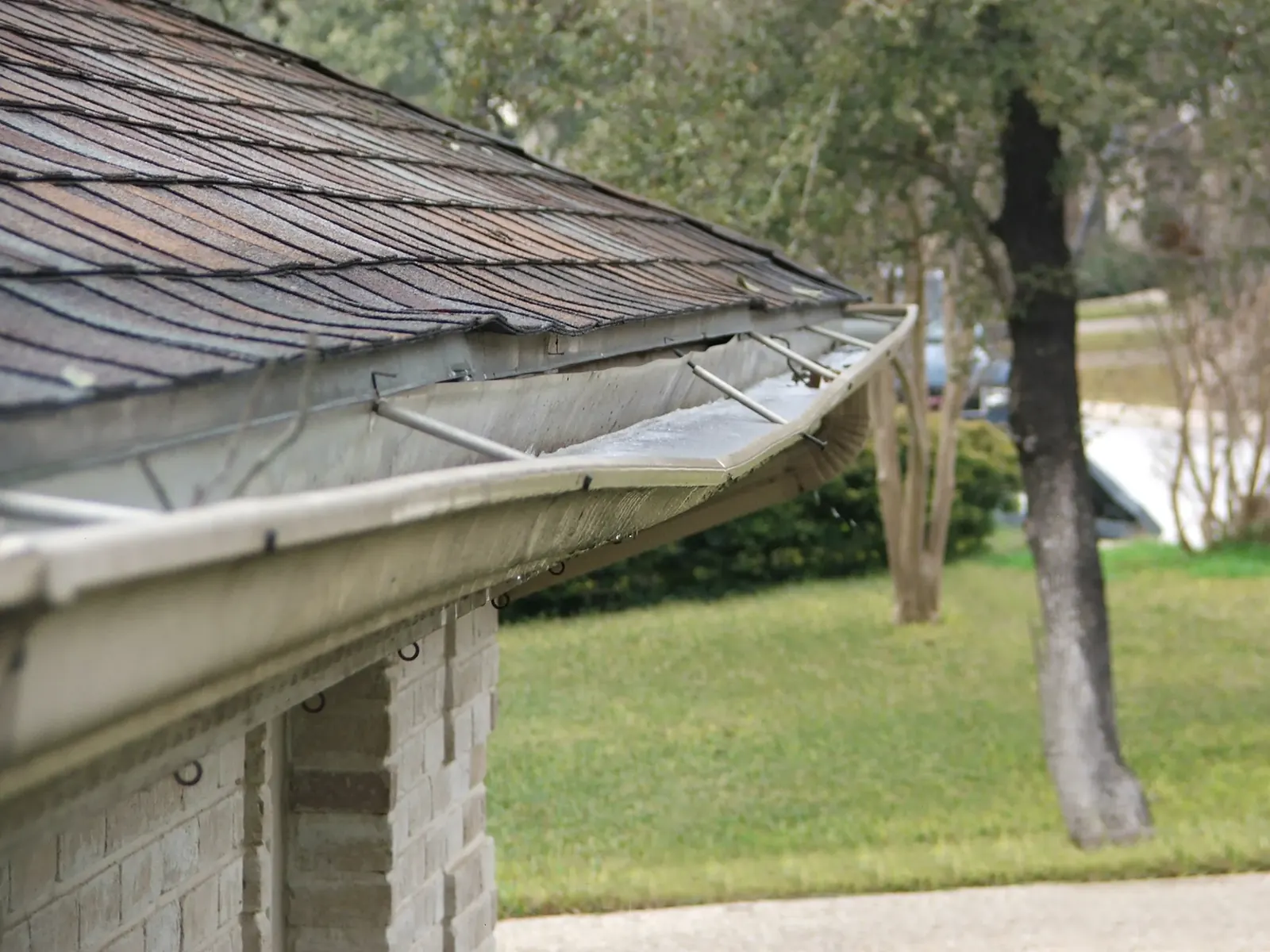
After wind, hail or intense rain, inspect gutters from the ground for dents, detached sections, pull-away, open joints, blocked downspouts, changed discharge and water behind the gutter. Do not climb a wet roof, unstable ladder or damaged structure to investigate. Document what is visible, keep the repair scope separate from insurance questions, and have a qualified provider evaluate conditions that are outside safe ground-level reach.
Storm-damage signs to look for
| Visible sign | What it may indicate | What else to check safely |
|---|---|---|
| Dents or crushed sections | Hail, branches or impact | Whether the run still slopes and drains |
| Gutter pulled from fascia | Wind load, impact or failed attachment | Fascia, soffit and roof-edge damage |
| Missing end cap or open joint | Debris or wind displacement | Water path and nearby corrosion |
| New sag or low point | Loose hanger or distorted run | Standing water and outlet flow |
| Downspout separated or bent | Impact, movement or fastener failure | Extension and discharge direction |
| Water behind the gutter | Pull-away, roof-edge or flashing issue | Siding, fascia and interior-water symptoms |
| Soil erosion or ponding | Changed discharge or broken extension | Whether water now returns toward the building |
A symptom does not establish whether the gutter, roof, fascia or drainage system is responsible.
Safety comes before documentation
Do not work from a roof after rain, hail or high wind. Do not approach loose sections, hanging metal, downed lines, unstable branches or damaged electrical equipment. Keep children and pets away from the area. A storm can leave a gutter attached to a weakened fascia or roof edge, so do not use it for support.
Ground-level photos, video of flowing water from a stable position and notes about when the problem appeared are useful. If the gutter cannot be seen safely, say so in the request rather than taking a greater access risk. The gutter-cleaning safety guide covers elevated-access limits.
What happens after a storm
A reasonable inspection sequence is:
- Wait for safe weather and ground conditions.
- Look for branches, debris, displaced sections, dents, sagging and pull-away.
- Trace the visible roof-edge and downspout path from a safe position.
- Note whether overflow occurs in ordinary rain or only during intense events.
- Separate gutter work from roof, fascia, soffit, siding, electrical, grading and foundation concerns.
- Request an itemized repair or replacement scope.
Cleaning may be appropriate when debris is the only issue, but storm impact can also distort the gutter or damage attachment. Do not assume a post-storm cleaning is a complete repair.
Repair versus replacement after impact
Localized denting, a displaced end cap, a loose hanger or a separated extension may be repairable when the surrounding system is sound. Replacement deserves comparison when runs are crushed, many joints are open, corrosion is widespread, the fascia has failed, or the system repeatedly overflows after the storm.
The replacement-signs guide and sagging-gutter guide help separate a one-point repair from a broader condition. A replacement estimate should not hide related roof-edge or drainage work.
Insurance and claim boundaries
Storm damage may be relevant to a homeowner’s policy, but coverage, deductibles, exclusions, documentation rules and claim handling depend on the policy and insurer. Katy Gutter Pros does not promise coverage, adjust claims or guarantee reimbursement through this guide. Ask the insurer what documentation is required, and do not sign an assignment or authorize work you do not understand.
A gutter estimate can describe observed conditions and proposed work. It is not an insurance decision or structural diagnosis.
What to include in a repair request
Provide the property location, storm date if known, affected elevations, safe ground photos, story count, visible roof or fascia symptoms, downspout changes, prior repairs and whether cleaning has occurred. Request a gutter repair estimate when the area is safe to approach. Use the gutter repair service for repair scope, the gutter cleaning service for debris-only conditions, and why gutters overflow when the storm exposed a flow-path problem.
A written scope should state inspection limits, repair or replacement components, removal, cleanup, related-trade exclusions, price, changes and product/workmanship terms.
Frequently asked questions
Can storm-damaged gutters be repaired?
Sometimes. A localized dent, loose hanger, end cap or extension may be repairable when the surrounding gutter and attachment are sound. Widespread distortion or pull-away may require replacement comparison.
Should I clean gutters after a storm?
Debris may need removal, but cleaning does not correct impact damage, pull-away, open joints, fascia failure or a changed discharge path. Inspect from the ground or use qualified help.
Can hail damage gutters without damaging the roof?
Yes, but roof and gutter conditions should be documented separately. A ground-level gutter symptom does not prove the roof is undamaged or damaged.
Will homeowner insurance pay for storm-damaged gutters?
Coverage depends on the policy, cause, exclusions, deductible and insurer review. Do not assume coverage or rely on a contractor’s promise.
Can I inspect storm-damaged gutters from a ladder?
Do not use a ladder when the roof, gutter, fascia, ground, branches or electrical conditions are wet, damaged or unstable. Ground observation or qualified professional access is safer.
Should dented gutters be replaced?
A limited dent may be repairable, while crushed runs, repeated overflow, corrosion, pull-away or damaged attachment justify comparing replacement.
What should a storm-damage estimate include?
It should identify observed damage, inspection limits, repair or replacement scope, downspouts, removal, cleanup, related-trade exclusions, price, changes and written terms.
Sources
- Texas Department of Insurance: Home Damaged by Storm FAQ
- Texas Department of Insurance: Prepare for a Hurricane or Tropical Storm
- NWS Houston/Galveston: Southeast Texas Hurricane Guide
- U.S. Consumer Product Safety Commission: Outdoor Repairs Safety Checklist
Content review date: August 8, 2026.